
 ultimate-guide
Tankless Water Heater Installation Cost: 2026 Guide
Table of Contents
- What Drives Tankless Water Heater Installation Cost in 2026
- Tankless Water Heater Installation Labor Rates and What They Cover
- Gas vs. Electric Tankless: How Unit Type Changes Your Total
- Plumbing Permit Costs for Water Heater Replacement and Code Compliance
- Tankless Water Heater vs Tank Cost: Breaking Down the Full Picture
- Retrofitting Challenges in Older Homes and DIY vs. Professional Risk
- Rebates, Tax Credits, and Long-Term Savings to Offset Your Cost
- Conclusion: Getting a Fair Quote Without Surprises
- Frequently Asked Questions
Last Updated: September 13, 2026
What Drives Tankless Water Heater Installation Cost in 2026
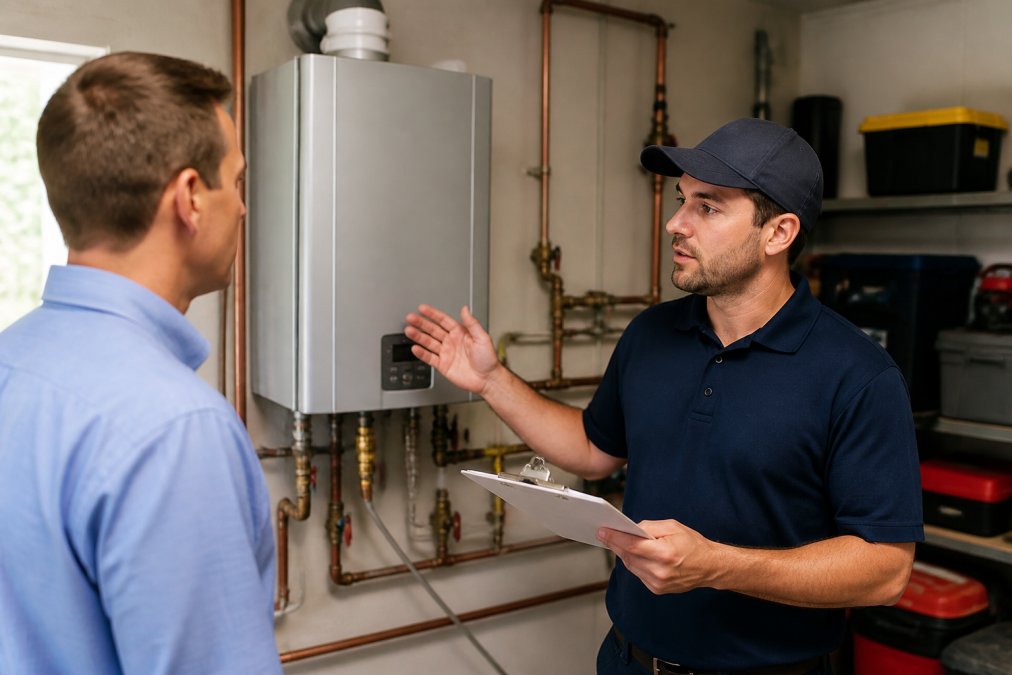
The tankless water heater installation cost you're quoted reflects far more than the unit in a box: equipment, labor, permits, and whatever modifications your home needs. This guide from Metro Repair Plumber breaks down each line so you can spot a fair quote, and a padded one, before you sign.
Equipment is often the smaller half of the bill; the variables that push a quote from modest to steep live in your walls, gas line, and electrical panel.
Unit Cost vs. Installed Cost: What You're Actually Paying For
Installed cost is the total you pay to have a working tankless system in your home: equipment, labor, permits, and any retrofitting your house requires. Unit cost is just the box. The gap between the two is where quotes diverge, sometimes by thousands for what looks like the same job.
A newer home with adequate gas and venting sits at the low end; a 1970s home with galvanized pipes and an undersized gas meter sits at the high end. Same heater, very different project.
Why Two Quotes for the Same Job Can Differ by Thousands
Two contractors can look at your utility room and see different scopes: one prices a direct replacement, the other the gas line upgrade, new venting run, expansion tank, and code corrections your setup needs.
That's interpretation, not dishonesty. The honest contractor tells you which category you're in before work starts. Ask any provider to itemize equipment, labor, permits, and modifications separately, a written, line-item quote is your best protection against surprise charges.
Tankless Water Heater Installation Labor Rates and What They Cover
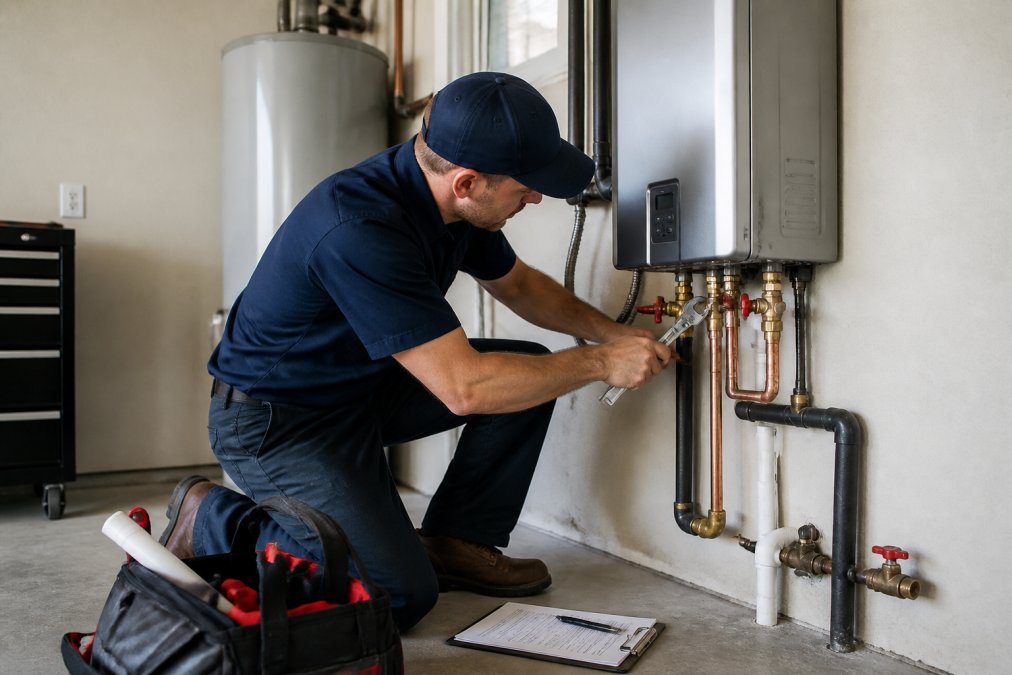
Labor is where the same heater can cost two very different amounts. A licensed plumber handles mounting, connections, gas or electrical hookup, venting, and the flush and test; what changes between bids is how much is a straight swap versus new construction inside your walls.
How Labor Is Priced: Flat Rate vs. Hourly vs. Time-and-Materials
Most established plumbing companies price tankless installs as a flat rate tied to a defined scope, not an open clock, so the contractor absorbs any overrun. Hourly and time-and-materials pricing shift that risk to you.
A common pattern bundles the standard scope into the flat rate, then adds separate line items for anything outside it: a gas line upgrade, new venting run, panel upgrade, or recirculation loop. Ask which items are inside the flat rate and which are change orders, in writing, before work starts.
What a Fair Labor Charge Includes
A complete labor line covers:
- Removing and disposing of the old unit
- Mounting the new heater and connecting water lines
- Gas or electrical hookup and safety checks
- Venting installation to code
- System flush, pressure test, and walkthrough
If a bid lists labor as a single number with no scope, you can't compare it to another bid. Ask for the scope in writing.
Why Labor Varies So Much Between Homes
The labor portion is driven less by the heater and more by the house:
- Distance from the gas meter or panel. A long run of new gas line or a new circuit adds material and hours.
- Wall type and access. Mounting on drywall in a utility room is quick; running venting through a finished ceiling or exterior wall is not.
- Old plumbing condition. Galvanized or undersized supply lines often need replacement first.
- Venting route. A short vertical run to an existing roof penetration is cheap; a new horizontal run through a sidewall, with clearances to windows and doors, is not.
- Permit and inspection time. Pulling the permit and meeting the inspector is real labor.
A Simple Way to Sanity-Check a Labor Quote
Ask the contractor to break labor into three buckets: removal and mounting, hookups and venting, and testing and handoff. If one bucket is unusually large, ask why, a gas line upgrade should appear as its own line item, not buried in labor.
Flat Rate vs. Hourly: Which Protects You
For a defined install, flat rate is almost always the better deal. You know the number before the truck arrives, and the contractor carries the risk of a longer-than-expected day. Hourly pricing can look cheaper on paper, but a job that runs long over an unexpected gas line issue erases the difference fast. If a contractor insists on hourly, ask for a not-to-exceed cap in writing.
Gas vs. Electric Tankless: How Unit Type Changes Your Total
The fuel type reshapes the entire project, not just the equipment line. Gas units usually need a larger gas line and dedicated venting; electric units usually need dedicated circuits and often a panel upgrade. Both can be affordable, but the hidden costs land in different places.
Gas Line Upgrades, Venting, and BTU Capacity
A gas tankless heater fires hard and fast to heat water on demand, pulling far more BTU capacity than a tank unit, so an undersized gas line has to be upgraded. Venting adds another line item: stainless steel for many condensing units, PVC for others, and the run must meet code for clearances and materials.
Electrical Circuit Capacity and Panel Limits
Electric tankless heaters demand serious circuit capacity. Many homes lack the spare capacity, so the project includes new dedicated circuits and sometimes a full panel upgrade, a variable that can swing a quote dramatically. Before comparing electric bids, confirm your panel has room.
| Factor | Gas Tankless | Electric Tankless |
|---|---|---|
| Common upgrade needed | Gas line, venting | Circuits, panel |
| Venting required | Yes, to code | None |
| BTU/capacity concern | BTU capacity, gas pressure | Circuit capacity, panel limits |
| Best for | Homes with adequate gas supply | Homes with spare electrical capacity |
Plumbing Permit Costs for Water Heater Replacement and Code Compliance
Plumbing permit costs for water heater replacement are a required line item in most jurisdictions, and skipping the permit is a mistake that follows you. Permits exist so the work gets inspected for code compliance: proper venting, safe gas connections, correct electrical work, and adequate seismic or expansion protection.
Permit fees are usually modest, but the inspection is where value shows up. A permitted, inspected install protects your warranty and matters at resale. An unpermitted install can surface during a home inspection and become the buyer's negotiating leverage against you.
Ask who pulls the permit and who pays for it. Reputable providers include it in the written quote. If a bid omits permits, that's not savings, it's risk transferred to you.
Tankless Water Heater vs Tank Cost: Breaking Down the Full Picture
The tankless water heater vs tank cost comparison rarely ends at the purchase price. Tank units cost less upfront and are simpler to install. Tankless units cost more upfront but last longer and use less energy, shifting the math toward total cost of ownership.
Here's how the two compare across the factors that actually move your budget:
| Cost Factor | Tank Water Heater | Tankless Water Heater |
|---|---|---|
| Upfront equipment | Lower | Higher |
| Installation complexity | Simple swap | Retrofitting often needed |
| Lifespan | Shorter | Longer |
| Energy use | Standby losses | On-demand heating |
| Maintenance | Minimal | Annual descaling |
| Best for | Tight budgets, simple swaps | Long-term savings, space savings |
Tankless wins on space and long-run efficiency. Tank wins on upfront simplicity. The right answer depends on how long you plan to stay and how much retrofitting your home needs.
Retrofitting Challenges in Older Homes and DIY vs. Professional Risk
This is where the real money hides. A tank-to-tankless conversion is not a swap, it's a small construction project, and the cost drivers are almost never the heater but the gas line, venting route, electrical service, and water quality.
The Four Retrofitting Cost Drivers
1. Gas line sizing. A tankless gas unit fires at a much higher BTU input than a tank unit, often several times higher. An existing gas line sized for a tank heater usually has to be upsized, and sometimes the meter itself upgraded by the utility, a separate cost a tank swap never triggers.
2. Venting. Tank units commonly vent through a metal flue a tankless unit cannot share. Condensing tankless units typically use PVC or CPVC venting with specific slope and clearance rules; non-condensing units need stainless steel. A new vent run is common, and the route matters: a short vertical run to an existing roof penetration is far cheaper than a new horizontal run through a finished wall.
3. Electrical service. Electric tankless units draw very high amperage and usually need dedicated circuits sized to the unit. Many older panels have no spare capacity, turning the job into a panel or service upgrade, a variable that can move a quote more than the heater itself.
4. Water quality and plumbing condition. Hard water accelerates scale buildup in the heat exchanger, so annual descaling matters more in some regions. Galvanized or undersized supply lines often need replacement first, and a pressure-reducing valve or expansion tank may be required by code or warranty terms.
Why a Tank-to-Tankless Conversion Is Not a Swap
A tank heater is a like-for-like replacement: same fuel, venting, and footprint. A tankless conversion changes the fuel demand, venting material and route, electrical load, and often the mounting location, each a separate scope item with its own permit and inspection implications. That's why two homes with the same heater can see quotes differing by thousands.
DIY vs. Professional: The Real Risk Assessment
Most cost guides treat DIY as a way to save money. In practice, a tankless install touches gas, electrical, venting, and potable water, mostly permit-and-inspection work, and the risks go beyond a leak:
- Carbon monoxide. Improper venting of a gas appliance is a life-safety issue and the most common reason a gas tankless install fails inspection (the CDC).
- Gas connection failure. An undersized or improperly connected gas line can fail inspection and leak.
- Voided warranty. Most manufacturers require licensed installation to honor the warranty. A DIY install can void coverage on the heat exchanger, the most expensive part to replace.
- Insurance and resale. An unpermitted install can surface during a home inspection and become a negotiating issue at resale.
- Code compliance. Venting clearances, gas line sizing, electrical circuit requirements, and expansion protection are all code items that vary by jurisdiction.
For most homeowners, the professional route is cheaper once you price the risk. DIY savings are real only if the install is simple, permitted, and inspected, rare for a tank-to-tankless conversion.
Rebates, Tax Credits, and Long-Term Savings to Offset Your Cost
Incentives can meaningfully reduce your net cost, but eligibility rules change and vary by program. Check current federal, state, and utility programs directly, since high-efficiency condensing units often qualify where standard units don't.
The long-term savings picture is simpler. Tankless units avoid the standby losses of a tank that reheats water around the clock, and they last longer, spreading the upfront cost over more years. Add annual descaling, especially in hard water areas, and the unit holds its efficiency rating longer.
U.S. Department of Energy guidance on tankless water heaters explains how on-demand heating cuts standby losses, and ENERGY STAR program information is the place to verify which models qualify for incentives before you buy.
Conclusion: Getting a Fair Quote Without Surprises
The anxiety around tankless water heater installation cost comes down to not knowing what's fair. The fix is process, not guesswork: get itemized quotes, confirm who pulls permits, and ask what happens if the job turns out bigger than expected.
That's exactly how Metro Repair Plumber operates. Every technician is licensed, insured, and background-checked, you get a written quote before any work begins with no hidden fees, and we protect your home and floors throughout the job, backed by a satisfaction guarantee. Chat with us to get a transparent quote and a job done right the first time.
Frequently Asked Questions
What is the average labor cost to install a tankless water heater?
Labor for a tankless water heater installation typically runs higher than a standard tank swap because the job involves new gas or electrical work, venting, and mounting. The exact labor rate depends on your home's existing plumbing, the unit type, and whether upgrades like a gas line or electrical panel work are needed. Metro Repair Plumber provides a written quote before any work begins, so you see the labor breakdown upfront with no hidden fees.
Does a tankless water heater require a gas line upgrade?
Many homes need one. Tankless units often demand higher BTU capacity than tank models, and older gas lines may not deliver enough volume or pressure. A licensed plumber will check your gas pressure and line size during the estimate. If an upgrade is needed, it is usually the single largest line item in the quote. Skipping this step risks code violations and poor performance.
How do plumbing permit costs for water heater replacement affect my total?
Most municipalities require a plumbing permit for any water heater replacement, including tankless. Permit fees vary by jurisdiction and are typically a modest portion of the total, but skipping the permit can lead to failed home inspections, code compliance issues, and problems with insurance claims. A licensed contractor pulls the permit and schedules the inspection as part of the job.
Are there tax credits or rebates available for tankless water heater installation?
Yes, several federal and utility rebate programs exist for high-efficiency tankless units, and eligibility depends on the unit's energy efficiency rating and your utility provider. These incentives can offset a meaningful portion of the upfront cost. Ask your installer for the model's efficiency documentation, since rebate applications require it. Your contractor should be able to point you to the right programs.
How does tankless water heater vs tank cost compare over time?
Tankless units cost more upfront because of the unit price and the added labor for venting, gas, or electrical work. Over time, the higher energy efficiency rating and longer lifespan can lower total cost of ownership. Tank models are cheaper to install but typically need replacement sooner and lose heat through standby losses. The right choice depends on how long you plan to stay in the home.
What are the hidden costs of installing a tankless water heater?
Common surprises include gas line upgrades, electrical panel capacity issues, new venting materials like PVC or stainless steel, a thermal expansion tank, service valves, and descaling accessories for hard water. Retrofitting in older homes can also require moving the unit or running new lines. A written quote from a licensed contractor should itemize these so nothing appears on the final bill unannounced.
How long does it take to install a tankless water heater?
A straightforward replacement can take a few hours, but most tankless installations take a full day or more when gas line work, venting, or electrical upgrades are involved. Retrofitting in an older home with galvanized pipes or limited venting options can extend the timeline. Your contractor should give you a realistic schedule with the quote, not just a unit price.
Can I install a tankless water heater myself to save on labor?
DIY installation is risky for tankless units. Gas line work, venting, and electrical circuits usually require permits and licensed trades, and mistakes can void the manufacturer warranty, fail a home inspection, or create carbon monoxide hazards. The savings rarely justify the risk. Hiring a licensed contractor ensures code compliance and protects your home and insurance coverage.